
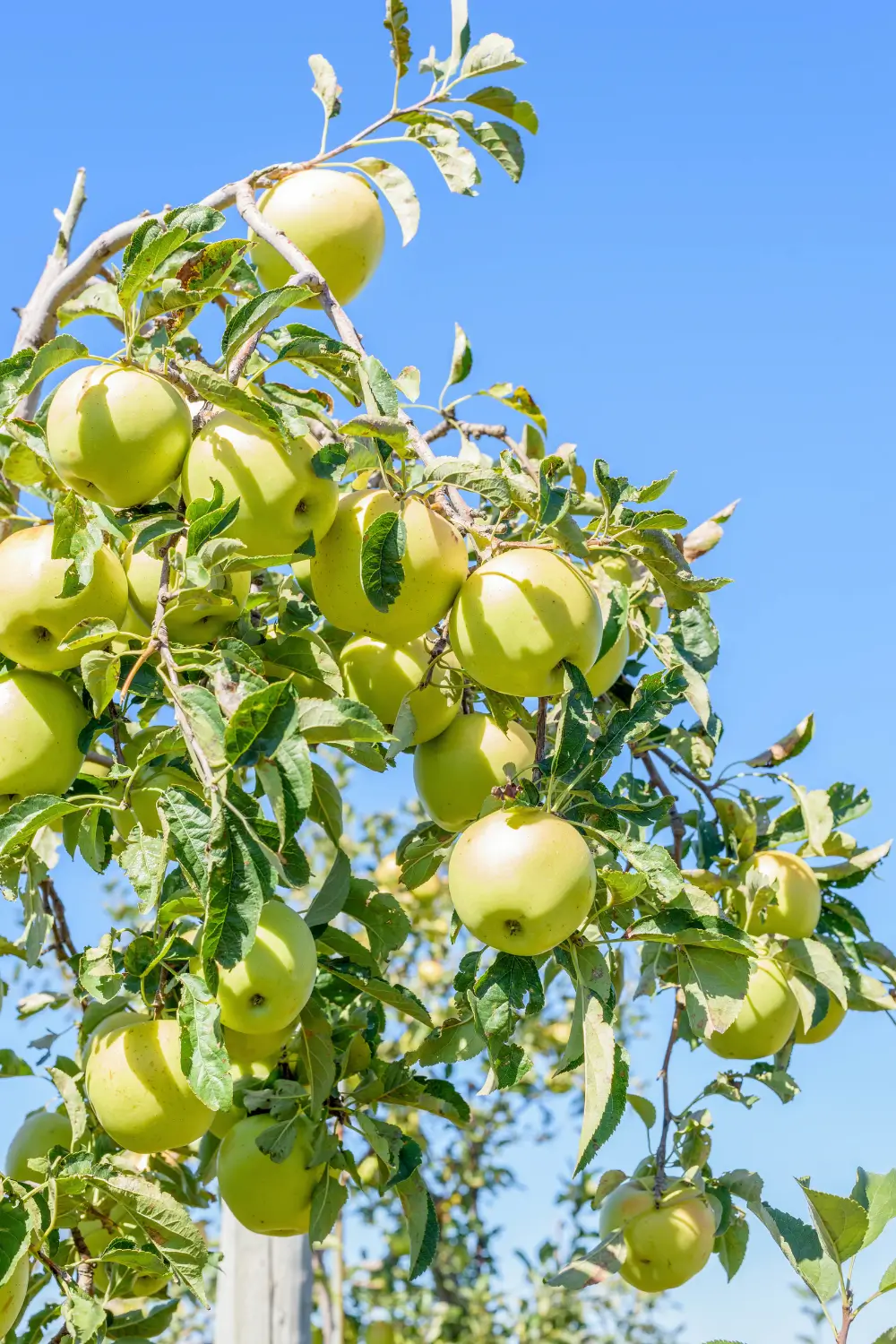
Apple Tree Golden Delicious 4-5 ft Collection Only
$ 11.69
**Collection Only** The ‘Golden Delicious’ apple tree (Malus domestica ‘Golden Delicious’) is a popular, heavy-cropping cultivar known for producing sweet, honey-flavoured apples that are excellent for both eating fresh and cooking. It is a versatile variety, though it performs best in warmer, sunnier climates and generally requires a pollination partner for a substantial crop. Key Characteristics Fruit Flavour & Appearance: Apples are medium to large, with greenish-yellow skin that ripens to a rich golden yellow. The flesh is cream-colored, crisp, juicy, and very sweet. Homegrown ‘Golden Delicious’ often have a superior flavour compared to supermarket versions, which are typically picked early for storage. Culinary Uses: Besides being a classic dessert apple, it’s prized for use in salads (as the cut fruit is slow to brown) and baking because the apples hold their shape well when cooked. Harvest & Storage: Apples are typically ready for picking in late October or November. A major advantage of this variety is its excellent storage quality; the apples can be stored in cool, dry conditions well into the winter months, sometimes until February or June. Tree Habit: The tree has a spreading growth habit and is a reliable, heavy cropper. It is a spur-bearer, making it suitable for training as cordons or espaliers. Growing Information Pollination: While sometimes described as partially self-fertile, ‘Golden Delicious’ is technically self-sterile and will yield a much larger, more reliable crop with a suitable apple or crab apple pollinator nearby. It is generally in pollination Group 3 or 4 (B or C) and can be pollinated by varieties in the same group or one group either side, such as ‘Gala’, ‘Cox’s Orange Pippin’, ‘Braeburn’, or ‘Granny Smith’. Planting Conditions: Position: Prefers a sheltered position in full sun to enable the fruit to ripen properly, though it can tolerate partial shade. It needs a warmer summer climate to thrive. Soil: Grows best in fertile, well-drained, neutral soil (chalk, clay, loam, or sand are all acceptable, provided they are well-drained) Large Rootball 4-5ft